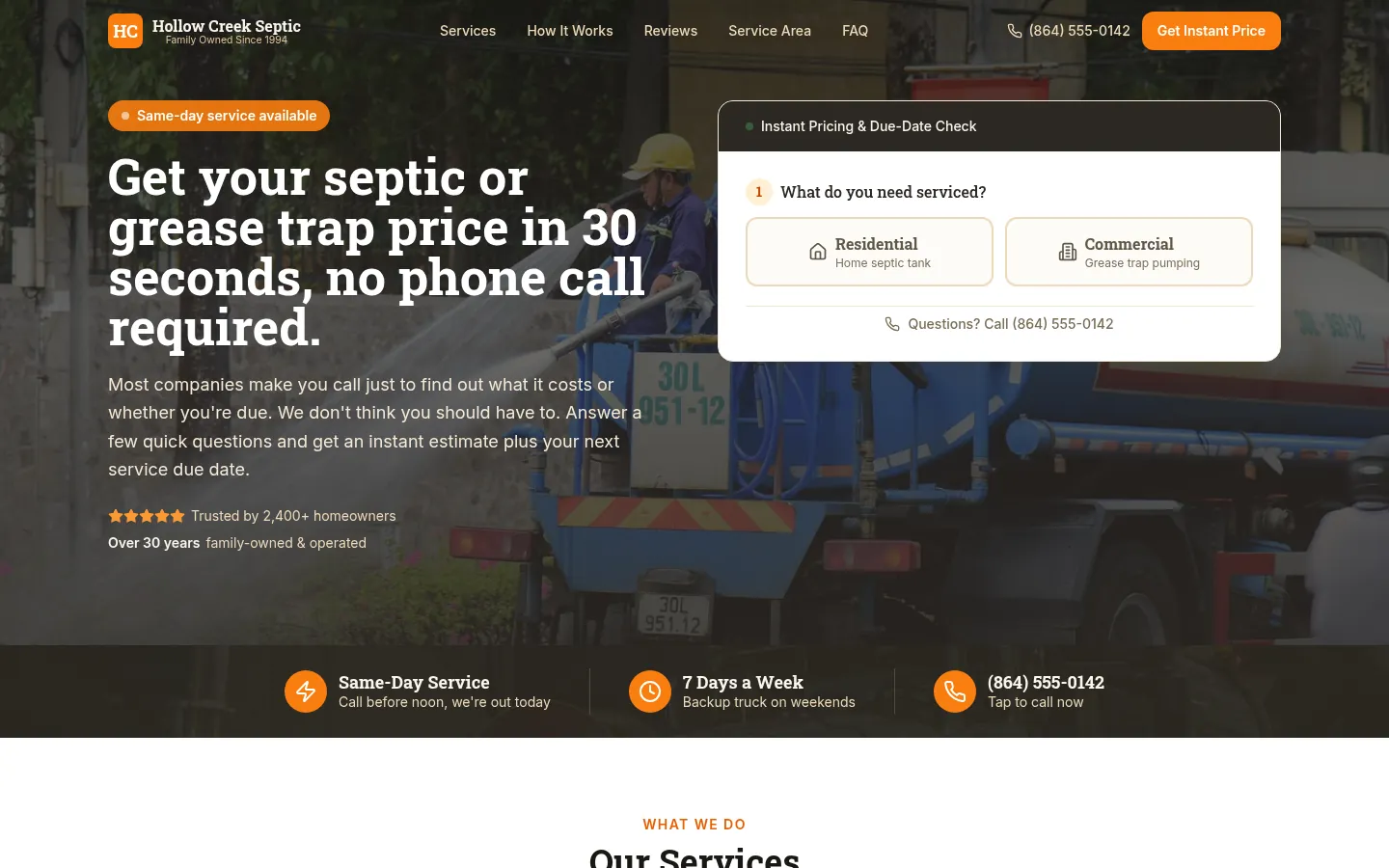

Hollow Creek Septic
A homepage built around one question: what will this cost? Visitors get a septic or grease trap price in about 30 seconds — and their next service due date — without picking up the phone.
View WebsiteConversion & digital growth for local service businesses
We work with local and field service businesses at the point where digital attention becomes customer action — helping the right people find you, understand what you do, trust you quickly, and reach you without friction.

What we tend to see
Most local businesses are not losing customers because the work is poor. They lose them because the website makes a ready customer stop and think. These are the things we notice first.
The headline describes the company in general terms instead of naming the service someone came looking for.
For a local business, "do you cover me?" is the first question — and it is often nowhere near the top.
The one thing that pays the bills sits three clicks deep, level with services almost nobody asks for.
"Established in 2004, family owned and operated" answers a question the visitor has not asked yet.
No reviews, no recognisable work, no reassurance at the exact moment the visitor starts to hesitate.
The visitor is ready to act and has to hunt for how — or the form asks for far more than the moment deserves.
Conversion optimization
A business can have visibility, steady website traffic and good reviews and still lose potential customers before they ever make contact. The problem is usually not getting people to the site. It is what happens after the click.
What we look at after the click
How we think
We go through a site the way a first-time customer does — as a run of quick, silent questions. Wherever the answer is not obvious, that is usually where visitors hesitate and potential customers drop off.
A real example
Here is how conversion thinking works in practice. A septic company writes a line it is proud of. A customer arrives with something else entirely on their mind.
“Professional septic solutions for residential and commercial customers.”
The problem is not the wording. It is that the page has not answered the visitor's immediate questions. Fix that order — customer questions first, company description second — and the same traffic starts producing more enquiries.
Selected work
A few service-business builds that show how we approach the customer decision. Each one leads with the thing a ready customer wants to know — price, availability, area — instead of making them hunt for it.

A homepage built around one question: what will this cost? Visitors get a septic or grease trap price in about 30 seconds — and their next service due date — without picking up the phone.
View Website
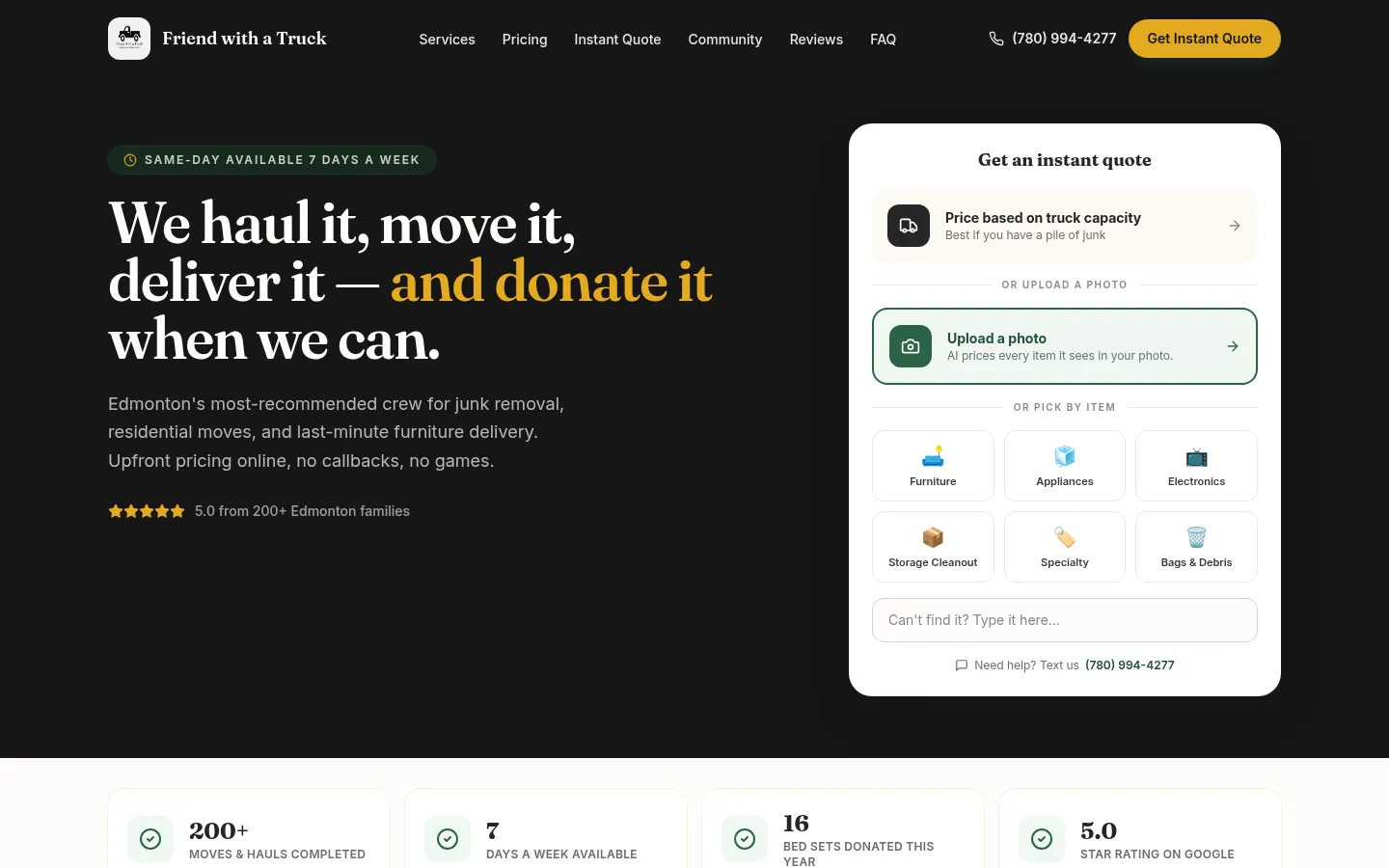
Instant, upfront quotes are the whole pitch. Customers price a job by truck capacity, by uploading a photo, or by picking items — so the enquiry is a booking, not a callback.
View Website
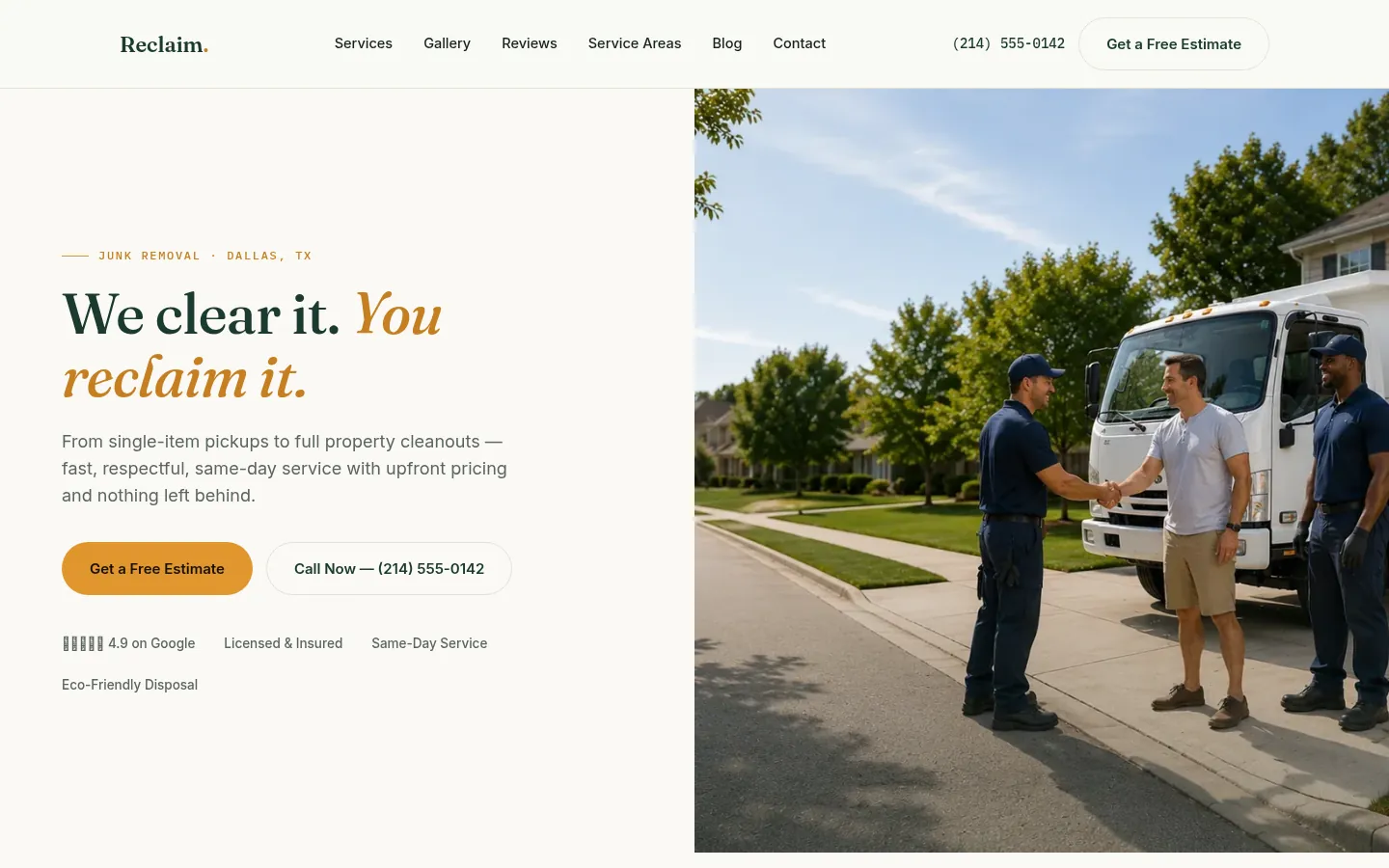
A calm, editorial layout that leads with the decision a customer is actually making — single-item pickup or full cleanout — alongside same-day service, upfront pricing and clear proof.
View WebsiteWhat we do
Find where visitors hesitate and remove the friction that stops enquiries.
Learn moreBuild the website around how customers actually decide.
Learn moreHelp the right nearby customers find the business in the first place.
Learn moreIdentify where the current digital experience is losing potential customers.
Learn moreWho we build for
We focus on businesses where digital visibility and conversion translate directly into real, measurable demand:
Insights
A website can be well designed and still fail commercially. The problem is rarely how it looks — it is what it asks the visitor to understand, trust and do.
When enquiries are flat, the instinct is to buy more traffic. But if the page does not convert, more visitors just means a more expensive leak.
Local service customers move fast and compare in tabs. The first five seconds decide whether you stay in the running or get closed.
We can review your current digital experience and show you the most important opportunities — where visitors hesitate, where potential customers drop off, and what to fix first.